Nation-Building through Restorative Justice (2026)
Working Paper
Joint with Thomas Gautier and Daniela Horta-Saenz
Abstract
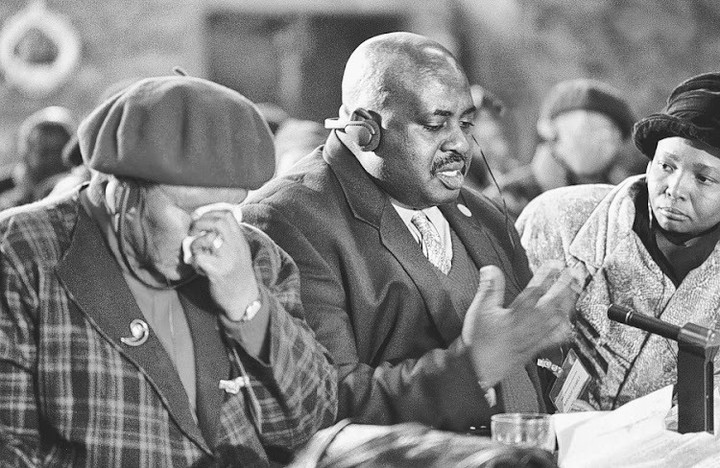
How do societies rebuild after decades of institutionalized oppression and intergroup violence? We address this question by studying the South African Truth and Reconciliation Commission (TRC), which sought to rebuild the nation by publicly documenting human rights violations committed under apartheid. Using quasi-exogenous variation in exposure to live TRC broadcasts, we show that the TRC strengthened unity among Black South Africans, reducing interethnic violence and increasing national identification. At the same time, it weakened interracial relations, increasing segregation and reducing intermarriage. Content analysis of the hearings suggests that intra-Black reconciliation---driven by emotional resonance rather than informational updating---was the key mechanism behind Black unity. Finally, using administrative tax data, we show that these heightened racial divisions had negative downstream consequences: TRC exposure reduced the effectiveness of affirmative action policies aimed at redressing apartheid-era discrimination.